



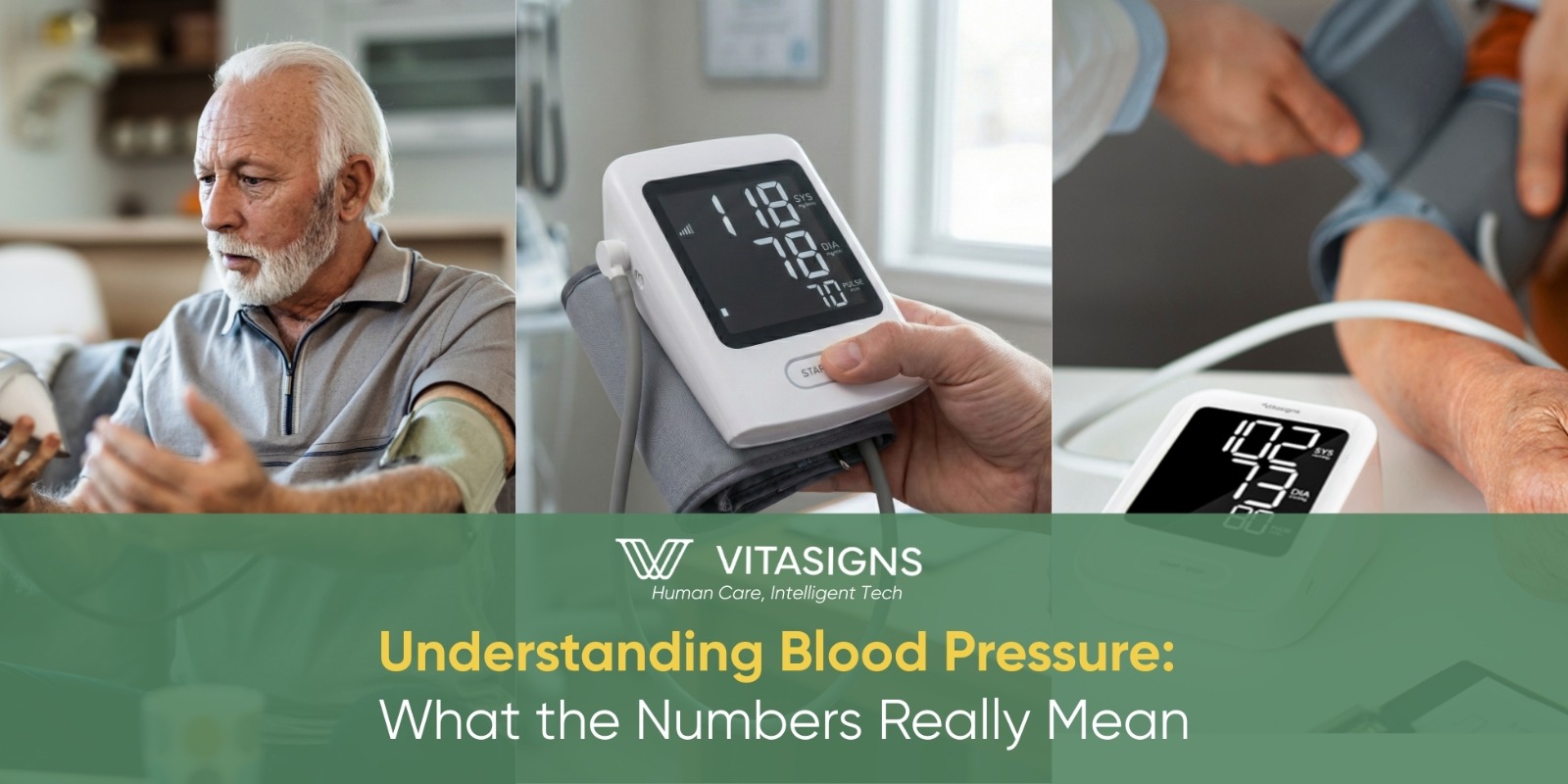
Blood pressure is one of the quickest ways to understand what’s happening inside your body. Yet most people look at the numbers and feel confused. What’s normal? What’s too high? And what should you pay attention to?
Let’s break it down in a way that actually makes sense, without medical complexity.
What Blood Pressure Really Measures
Every time your heart beats, it pushes blood through your arteries. Blood pressure tells you how much pressure that blood is putting on your artery walls.
Your reading shows two numbers:
1. Systolic (top number)
This tells you how much pressure is in your arteries when your heart is actively pumping.
You can think of it as the “push” phase.
2. Diastolic (bottom number)
This shows the pressure when your heart is resting between beats.
This is the “rest” phase.
Both are important because they show how hard your heart is working even when you don’t feel anything at all.
What Counts as a Normal Reading?
Here’s a simple, widely-used breakdown:
- Normal: Less than 120 / 80
- Elevated: 120–129 / under 80
- High (Hypertension Stage 1): 130–139 / 80–89
- High (Hypertension Stage 2): 140+ / 90+
- Hypertensive Crisis: 180+ / 120+ (Call emergency services)
You don’t need to memorize these ranges. What matters is understanding whether your numbers stay steady or begin rising over time.
If your readings often drift above normal, your care team may recommend home monitoring to track your trends more closely.
Why These Numbers Matter
Blood pressure doesn’t rise overnight. It changes quietly. That’s why many people don’t feel symptoms even when the numbers are high.
Your readings reveal:
- How hard your heart is working
- How open or tight your arteries are
- Whether your lifestyle habits are helping or hurting
- If your care team needs to adjust your plan
Many large health organizations recommend checking your numbers at home because home readings are often more accurate than rushed clinic measurements.
If you want to learn how to take accurate readings at home, you can read our guide on cuff placement and posture.
What Can Cause Higher Numbers?
Your blood pressure isn’t fixed. It responds to your daily life.
Common causes include:
- Stress or lack of sleep
- Too much salt
- Smoking or alcohol
- Lack of physical activity
- Certain medications
- Family history
- Age
Even everyday things like caffeine, dehydration, or rushing up the stairs can temporarily raise your numbers.
That’s why one reading doesn’t tell the full story, trends do.
Why Home Monitoring Helps
Taking your blood pressure at home helps you understand:
- How your body responds to your daily routine
- What patterns show up across a week
- Whether your readings go up at a certain time of day
- How well your treatment plan is working
Home readings also give your care team better data, especially when you use a cellular device that sends your measurements automatically.
If you’re using a Vitasigns monitor, your readings upload in seconds so your care team can follow your progress without you needing to do anything extra.
What To Do if Your Numbers Are Always High
If your readings consistently stay above normal, don’t panic but don’t ignore them either.
Start by:
- Taking readings at the same time each day
- Using a properly fitting upper-arm cuff
- Watching for patterns
- Sharing your trends with your care team
Your numbers are signals. They tell a story about your heart. The more you understand them, the better decisions you can make.
The Bottom Line
Your blood pressure numbers aren’t just data. They’re one of the clearest indicators of your heart health. When you understand systolic and diastolic pressure and what your daily readings show, you get a clearer picture of what your body needs.
If you want support with home monitoring or want to learn how RPM can help you stay on track, Vitasigns is here to guide you.